
The Board
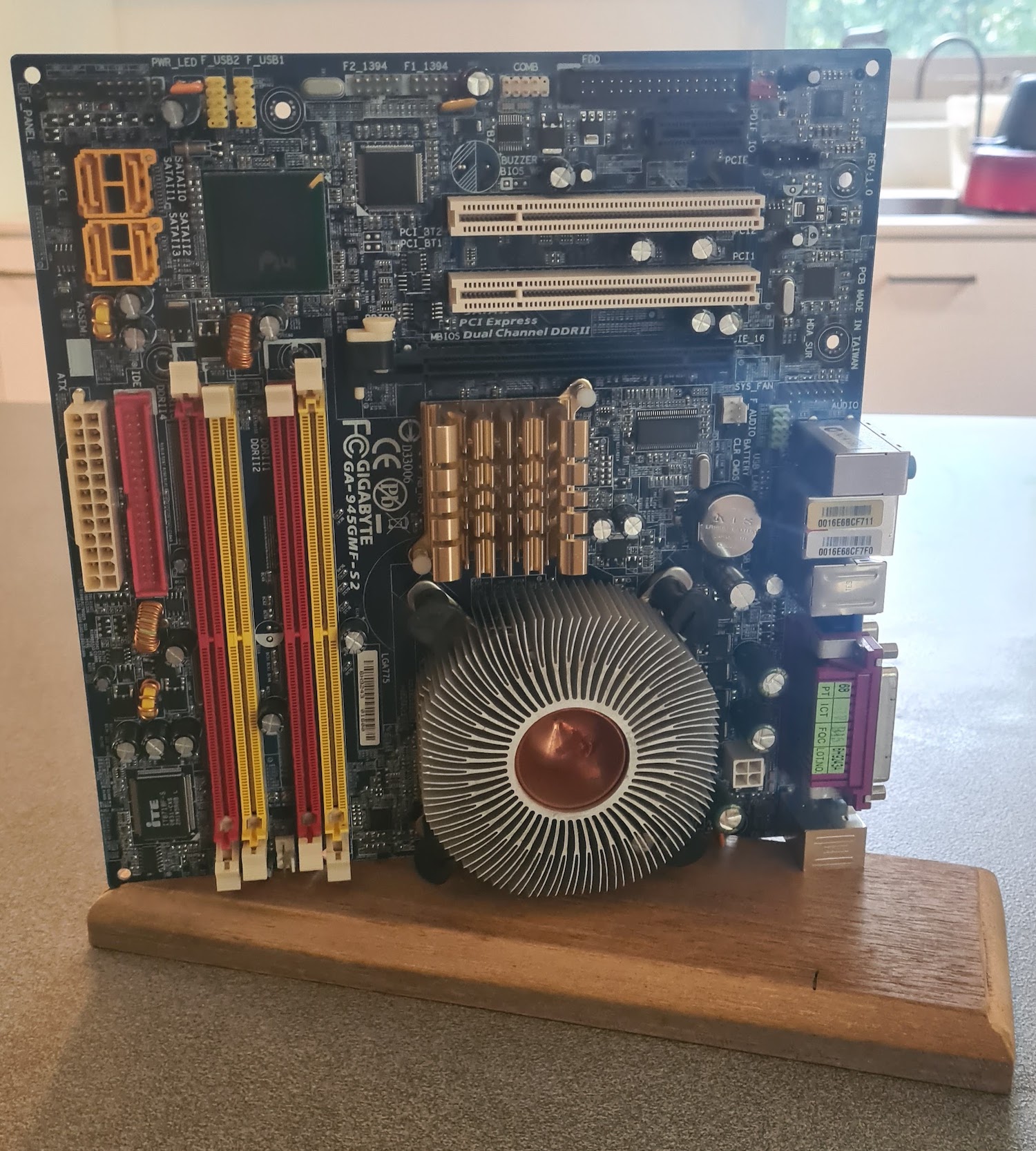
Computer motherboard, interference mounted on a wooden board. 2020
Curator’s notes:
In this, third a final work on technology, Korbel has chosen to explore the impact of technology on modern life. Although not consuming the whole board, the motherboard leaves little or no implied place for other aspects of life or future technology. In previous works, Korbel has left deliberate and confident negative space to indicate that, while we may not know its exact nature as yet, the future holds the promise of new ways of inhabiting and coexisting within a technological world. In this case, there is no doubt that the pervasive dynamic individuals (and, indeed, society as a whole) have with technology is final and will continue to dominate. The careful choice of an interference fit for the mounting further embodies the interference that technology has caused. However, there is also a close bond – a blending – where the two boards meet and the wooden surface and fibreglass mounting seem to create certainty and symmetry. This is reflective that during the pandemic year, technology has been vital to keep many aspects of our society and (real and imagined) communities functioning.
Critic’s counterpoint:
There are the beginnings of a fundamental statement on our relationship with technology within this work. The two boards are held together by tension and the friction of one surface against another. This not only evokes the tension between the technological and natural worlds that these two found objects represent, but the choice of the motherboard also reminds us of the tension between traditional (but enduring) conceptions of motherhood and the demands of late-capitalist society. The choice of the motherboard goes deeper – this is an interior component, a vital part of the system usually concealed from view in a non-descript case. Korbel has exposed the interior of this system for all to view – which parallels the (partial) liberation of the domestic space in the last fifty years. We are challenged to reflect upon the interior and hidden spaces in our own lives. However, this work lacks the transformative dynamism of Korbel’s earlier oeuvre. One feels the absence of the revolutionary energy that drove earlier work. It feels like a project that has just begun, but Korbel himself has indicated that this will be his last piece on this theme. There is unfinished business here, but – perhaps – that is the ultimate expression of the calamity and disruption of this pandemic year.
What plans haven’t fallen asunder this year?